



In my work as a clinical psychologist, I spend most of my days sitting with people who think, feel, and carry too much. And while some of their propensity to experience these heavy burdens comes from genetics and/or temperament, for many of my clients… in fact, most of them… it has also come from trauma.
Hearing the word “trauma,” you might have a certain image of overt trauma that comes to mind: physical abuse, sexual assault, war, etc. The kind you’d suspect might lead people to seek out support. And you might even have a picture of how that trauma gets addressed in treatment.
But here’s the surprising truth: many of the people I work with don’t even realize they’ve experienced trauma. They’re not walking in saying, “I was traumatized, and I need to work through this.” Instead, they come to therapy describing symptoms like anxiety, low self-esteem, perfectionism, and relational struggles.
So how can this happen? How can someone experience trauma and not know it?
This is the nature of emotional neglect. It’s often hard to know when you’ve experienced emotional neglect, because it isn’t an added experience of harm; it’s the absence of experiences necessary for healthy development. In other words, it’s the omission of good.¹
Emotional neglect isn’t about what happened to you, it’s about what didn’t.
But how do we identify what’s supposed to happen? How do any of us figure out what’s normal?
We all grow up in our own little bubble of experience. We know what happens behind our own closed door, but we seldom get a good look at what happens behind anyone else’s. This makes it extremely difficult to realize when something is off.
Why This Trauma Stays Hidden
Emotional neglect often starts in childhood, in homes where physical needs were met but emotional ones weren’t. Nobody hit you. Nobody screamed at you. But nobody really tuned in either. Nobody asked how you were feeling and actually waited for the answer. And nobody recognized the emotional weight of what you were carrying and helped you navigate it.
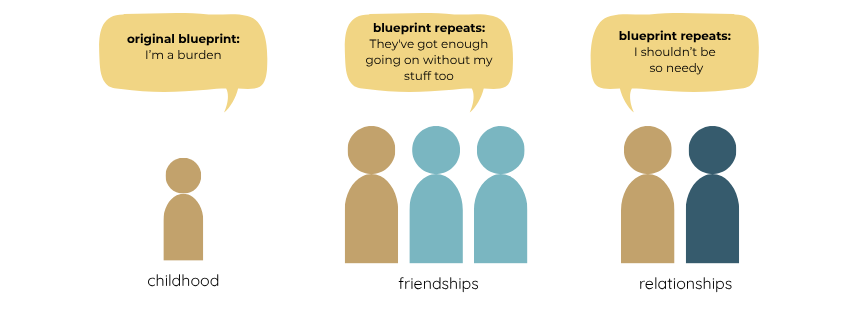
Here’s what makes this trauma so good at hiding: when this is your starting point, it becomes your baseline. You don’t have anything to compare it to, so you don’t recognize it as a gap. You just think this is what it feels like to be in relationship with someone.
And when this serves as the blueprint for future relationships, people often carry this hidden trauma from childhood straight into adulthood without ever clocking it. They move from that childhood home into one romantic relationship after another, sometimes into friendships too, having their emotional needs quietly go unattended. And they don’t know it’s happening, because they don’t realize it could be different.
Examples of Hidden Trauma: What Emotional Neglect Can Actually Look Like
Because emotional neglect is defined by absence rather than action, it can be hard to picture in concrete terms. So let’s make it concrete. Here are some ways emotional neglect can present:
Having a parent who showed up for every soccer game, took you to every doctor’s appointment, made sure you had new shoes when you outgrew the old ones, but never asked how you were doing after a hard day at school. The tangible things were covered. The emotional ones were not.
Being told “you’re fine,” or “you’re too sensitive,” or “you’re making too big a deal out of this” whenever you had some difficult feelings. The message underneath was all about teaching you to distrust your inner experience. It was “what you’re feeling isn’t real” or “isn’t valid.” Hear that enough times, and you learn to distrust your own emotions before you even finish having them.
Learning that difficult feelings weren’t welcome in your house. Maybe you were sent to your room to “figure it out” alone. Maybe a parent yelled at you to “stop crying” or left the room because they couldn’t handle what you were feeling. Or maybe you were told, “We don’t have time for this.” Somewhere along the way, you picked up on the fact that your family only wanted your company when you were happy, so you learned to put on that happy face while quietly stuffing everything else inside.
Having a parent who was physically present but emotionally checked out: scrolling their phone, distracted, not particularly curious about your inner world. Maybe they even seemed like they cared, offering a distracted “mm hmm” or a “that’s nice, honey,” but never actually engaging with what you were sharing.
Having no one notice you’d had a fight with your best friend, or if they did, no one helped you sort through it. Being asked what score you got on the presentation you were nervous about, but never how it felt to give it. The facts of your life were tracked. The experience of living them was not.
Coming home with big news, good or bad, and sensing that no one was really available to take it in with you. It’s that bubble bursting feeling: hoping for a certain response, and slowly realizing you’re not going to get it. Having a whole world inside you, and no one to share it with.
Being the “easy” kid, the one nobody had to worry about, because you learned early to keep your needs small and your feelings to yourself. Maybe your parents were visibly stressed about other things: work, finances, their marriage, the demands of parenting another sibling. You might have been more aware of their needs than they ever were of yours. And maybe you were even praised for being so easy, for never being something they had to worry about, that it became part of your identity.
None of these examples on their own necessarily point to emotional neglect. Every parent misses a moment here and there; that’s part of being human. What matters is the pattern over time: was tending to your emotional world the exception in your house, or was it the rule?
How Hidden Trauma Can Impact You
As you can hopefully gather now, hidden trauma doesn’t usually announce itself. There’s no overt flashbacks or acute nightmares as there often is with other forms of trauma.
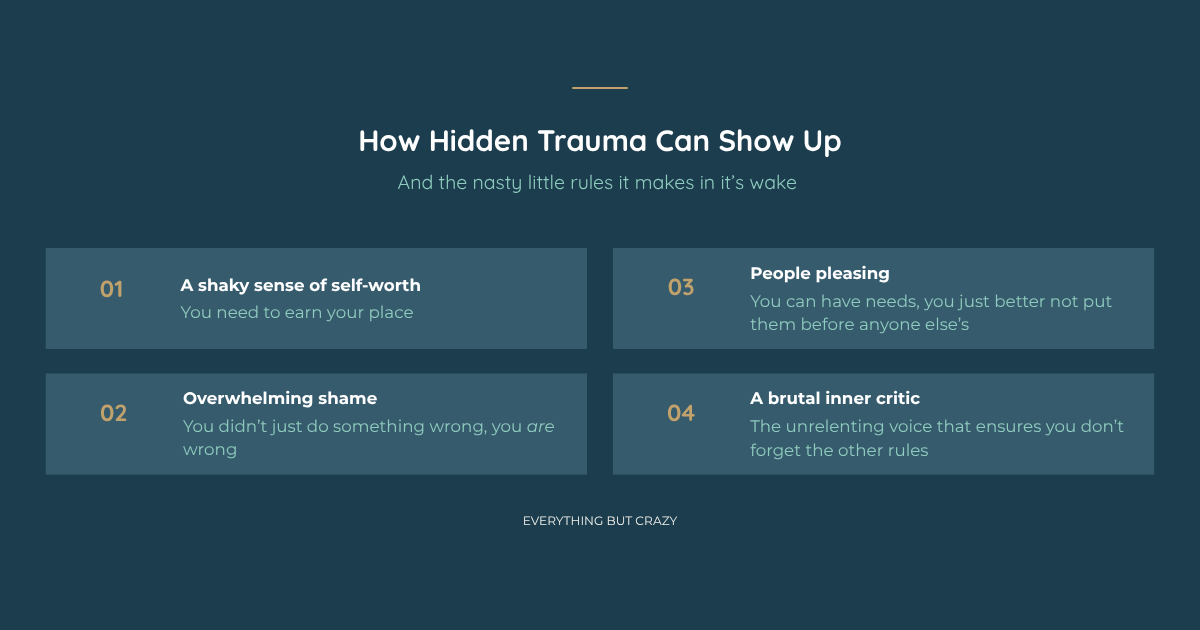
Instead, the hidden trauma of emotional neglect shows up sideways, in patterns that can look like personality traits or personal failings, when really they’re adaptations; the best strategies a younger version of you could find to survive an environment that didn’t give you what you needed. Here are a few common ways emotional neglect presents itself, and how we can trace the adaptation back to the trauma.
A shaky sense of self-worth
A quiet, persistent feeling of not being good enough, of not quite being worthy, even when there’s no clear reason for it. It’s the sense that you have to earn your place, that you’re one mistake away from being too much or not enough.
The emotional neglect link: When you didn’t have the routine experience of someone tending to your emotional needs, your child brain jumped to the conclusion that this must mean you weren’t worth tending to. Kids don’t have the capacity to think, “my parent is emotionally unavailable.” They think, “Something must be wrong with me that makes me need this.” That belief, formed young and repeated for years, becomes the relentless voice telling you that you’re too much or too needy.
Shame that’s out of proportion
A small mistake, one moment of not being perfect, and suddenly there’s a wave of shame that feels way bigger than the moment calls for. It’s not just embarrassment for having done something wrong; it’s a full-body sense of being wrong. Just by existing imperfectly.
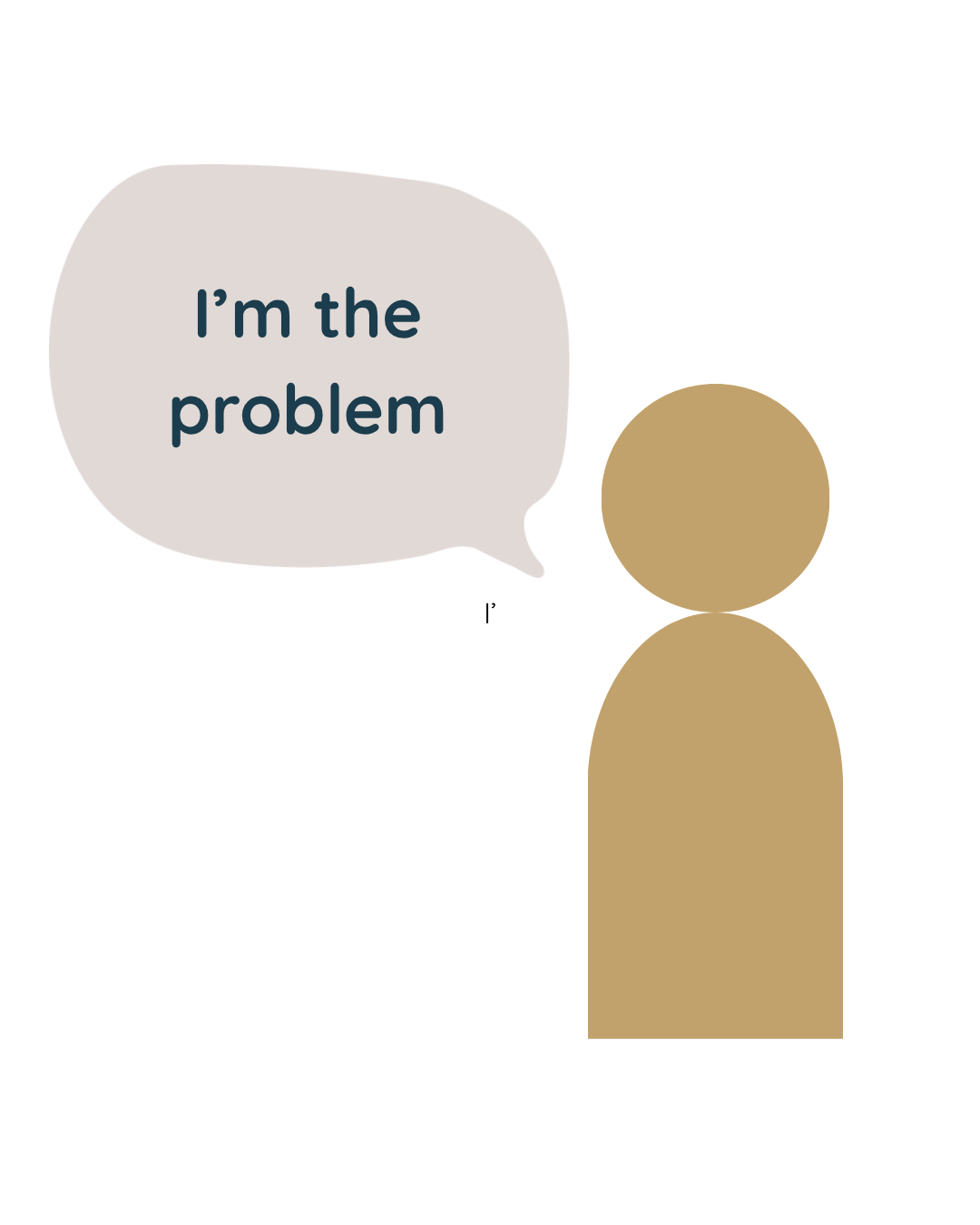
The emotional neglect link: When nobody was consistently there to help you make sense of your feelings as a kid, you had to figure them out on your own. And when kids figure things out on their own, they tend to land on the explanation that’s easiest for a young brain to reach: “I’m the problem.” So instead of a mistake just being a mistake, it became evidence of being a human that doesn’t measure up. That pattern of self-blame, built in childhood, is what turns an ordinary slip-up into a shame spiral decades later.
People pleasing
A pattern of putting everyone else’s needs ahead of your own. Saying no, setting a boundary, taking up space: all of it can feel almost impossible because you never got to practice voicing your needs and having it be ok.
The emotional neglect link: If your emotional needs were routinely overlooked, you learned early that expressing them didn’t get you very far (and it might leave you all alone). So you adapted. You got good at reading the room, anticipating what everyone else needed, and making yourself easy to be around, because that felt safer and more reliable than asking to be tended to. This helped you prevent rejection. But it also became the foundation for a lifetime of putting yourself last.
A brutal inner critic
Instead of understanding sadness, anger, or hurt as normal human responses to what you’ve lived through, the inner critic turns on you for having them. Feel sad, and you’re told you’re being dramatic. Need support, and the voice is already there, calling that need weak, or too much, or an inconvenience. It doesn’t ease up just because you’re an adult now. If anything, it’s had years to sharpen.
The emotional neglect link: Your parent likely never said these harsh things out loud. But somewhere along the way, you needed an explanation for the gap between what you needed and what you got, and a child’s mind doesn’t usually land on “my caregiver had limits.” It lands on “I must be too much” or “my needs are the problem.” That belief didn’t come from something your parent said. It came from you, filling the silence with the only explanation that made sense of the disparity at the time. And once that belief had a voice, it never really stopped talking.
Bringing Hidden Trauma Into the Light
If you’ve made it this far and found yourself nodding, even once, take that seriously. That recognition is data. It’s the same wisdom that got talked out of you years ago, quietly making itself known again.
Here’s what I want you to take from all of this: none of these patterns mean something is wrong with you. They mean something was missing, and you found a way to survive it. That’s adaptation. And adaptations that once kept you safe can be updated once they’re no longer needed.
You don’t have to overhaul your whole self-concept overnight. Healing from hidden trauma usually starts small: noticing when the inner critic pipes up and asking whether it’s telling the truth or just repeating an old belief. Naming a feeling instead of managing it away. Letting one person in on what you’re actually carrying, instead of performing “I’m fine.”
If this is the first time you’re really seeing emotional neglect for what it is, let that be enough for today. Understanding is the first step, and you don’t have to rush the rest.
And if this all feels familiar, you’re not the only one. This is a space for people doing exactly this work: learning to recognize what was missing, making sense of how it shaped them, and slowly, patiently, giving themselves what they didn’t get the first time around.
¹ This absence doesn’t need to be total to leave a mark. As Pete Walker discusses in Holistically Treating Complex PTSD: A Six-Dimensional Approach: Guidance for Therapists, Coaches, and Other Helpers to Repair the Damage and Arrested Development Suffered by Childhood Trauma Survivors, even a partial absence of care, enough missed moments of being seen, can still shape a person’s development.
If the patterns in this post feel less like a one-time read and more like something you’re ready to actually work through, my Anxiety Loop Course goes deeper into a lot of what we covered here. Check it out if it feels right.